Solar carport wood or metal: honest 2026 comparison (lifespan, cost, structural)
Solar carport comparison wood (treated pine, larch, Douglas fir) vs metal (aluminium 6063-T5, galvanised steel Z275): what really drives durability, maintenance, structural design and long-term cost. Engineering team view, no sponsored content.
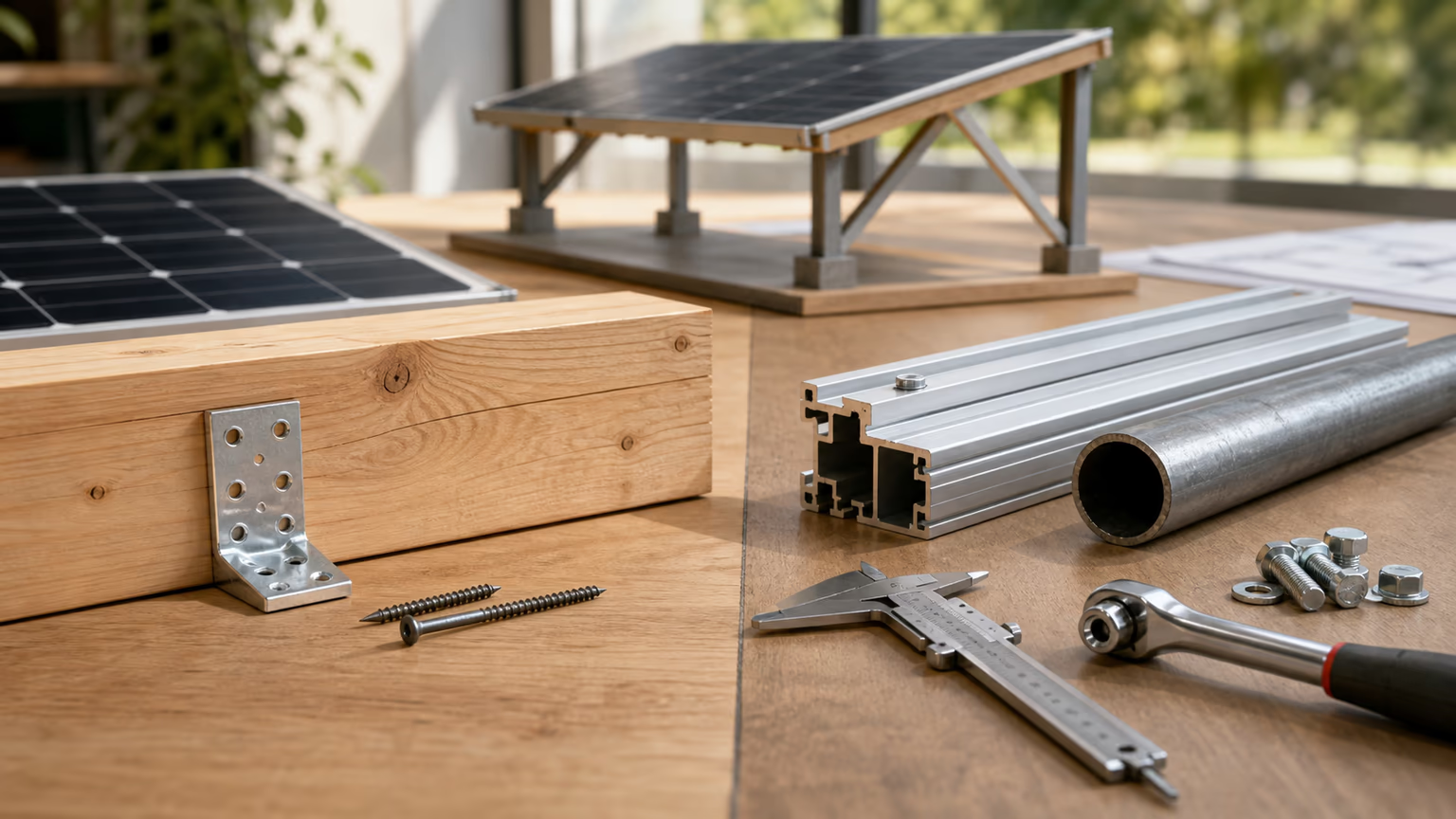
Short answer. For a carport that must carry solar panels for several decades, metal is usually the better choice: anodised aluminium 6063-T5 and galvanised steel Z275 do not rot, have predictable mechanical properties and need little maintenance, provided the corrosion protection suits the site. Timber can last a long time too, but its durability depends on the species, the preservative treatment and the detailing, and it needs regular maintenance. Wood remains a sound option in three cases: a conservation setting where timber is preferred, a small carport with a light array in a sheltered location, or a tight budget where a properly designed and founded timber structure beats under-engineered metal.
The choice between a wood and a metal solar carport goes beyond aesthetics: it affects the service life of your installation, the maintenance you will have to plan, the way an EV charge point is wired and the long-term cost of ownership.
This article compares the two material families from the engineering team’s point of view (BS EN 1991 loads, durability, maintenance) and the buyer’s point of view (purchase price, total cost, EV integration). No sponsored content: Sunrak manufactures in metal, but we cite the cases where wood remains the right choice.
Wood and metal: what we actually compare
“Wood carport” covers three very different families:
- Pressure-treated softwood (often pine) — the majority of DIY/big-box carport kits. Durability depends on the preservative treatment: BS 8417 specifications are written for a “desired service life” (commonly 15 or 30 years for exterior and ground-contact use), and cut ends must be re-treated on site.
- Larch or Douglas fir — used untreated for their appearance. Under EN 350, their heartwood is generally rated moderately to slightly durable (classes 3–4); sapwood is not durable.
- Glulam (glue-laminated timber) — for heavy framing or public canopies; requires specific engineering.
On the metal side:
- Aluminium 6063-T5 anodised — magnesium-silicon alloy, 15 µm anodising as standard. Bespoke extruded profiles.
- Galvanised steel Z275 — steel with a zinc coating of 275 g/m² in total for both faces (BS EN 10346), about 20 µm per face. Cost-effective and durable in low-to-moderate corrosivity environments.
Detailed comparison across 6 criteria
1. Durability: what really decides the lifespan
| Material | Main durability driver | What to check |
|---|---|---|
| Pressure-treated softwood | Preservative treatment and detailing | Treatment to BS 8417 for the right use class and desired service life; posts kept out of standing water; cut ends re-treated |
| Larch / Douglas fir | Natural durability of the heartwood (EN 350 classes 3–4) | Heartwood only, water-shedding details, ventilated joints |
| Anodised aluminium 6063-T5 | Anodic film thickness vs. site exposure | Finish suited to the corrosivity category (thicker classes near the sea) |
| Galvanised steel Z275 | Zinc consumption rate (ISO 9223 category) | Z275 is suited to low-to-moderate categories; heavier galvanising or duplex in aggressive ones |
For Z275 (~20 µm of zinc per face), the zinc loss rates published in ISO 9223 give an indicative time before the coating is consumed of more than about 28 years in category C2 (most rural inland sites), about 10 to 28 years in C3, and only about 5 to 10 years in C4 (industrial or coastal).
Practical consequence: whatever the material, replacing a structure while the PV system is still in service means dismantling and refitting the panels. Choose a structure whose expected life matches the life you expect from the PV system.
2. Structural loads under BS EN 1991
For a 2-car carport carrying 16 modules, the section sizes come from the site’s snow and wind loads (see our BS EN 1991 guide), the spans and the connection details — there is no universal section table. In general:
- timber needs larger sections than metal for the same spans, and its connections (bolts, plates, post bases) often govern;
- aluminium and steel have almost the same stiffness per kilogram, so aluminium profiles are deeper or wider than steel ones but lighter per part;
- for all materials, wind uplift usually governs the anchorages and foundations.
3. Maintenance
- Pressure-treated softwood: regular inspection; stain or oil if you want to keep the colour; check fasteners and post bases
- Larch / Douglas natural: no coating required if grey weathering is acceptable; otherwise periodic stain
- Anodised aluminium: no structural maintenance; occasional washing, especially near the sea
- Galvanised steel: periodic inspection; touch up any damaged zinc areas
4. EV charger integration
A 7.4 kW single-phase charge point draws up to 32 A; a 22 kW charge point needs a three-phase supply (32 A per phase). The cable run is designed and installed by the electrician to BS 7671 (and notified under Part P in England and Wales). With any structure, the usual solution is suitable external conduit or trunking fixed to a post. Sunrak profiles do not include an integrated cable channel, and drilling of structural members must be agreed beforehand. With wood, check fixings and fire separation details with the electrician.
5. Storm performance
We have not found reliable published data comparing insurance claims for wood and metal carports after UK storms. Failures typically come from under-sized anchorages or foundations and from connections not designed for uplift — whatever the material. A structure checked against the site’s BS EN 1991 wind loads, with anchorages to match, is the best protection.
6. Cost of ownership: how to compare
A timber kit is usually cheaper to buy. To compare fairly over the life of the PV system, add up for each option:
- purchase price of the structure designed for the same loads;
- foundations and installation;
- maintenance (staining, inspections, replacement of fixings);
- the risk and cost of replacing the structure — including removing and refitting the panels — before the end of the PV system’s life.
The longer the period you consider, the more the low maintenance of metal counts.
When wood remains the right choice
1. Listed building or conservation area: the planning or conservation officer may prefer timber for architectural integration.
2. Light load + sheltered site: for a small carport with a few modules in a mild, sheltered location, properly treated timber with sound foundations can be sufficient.
3. Constrained budget: if the budget is tight and the array small, a well-designed and well-installed timber structure is better than under-engineered metal.
In other cases — 2+ car carports, exposed sites, larger arrays — bespoke metal is generally the technically safer option.
Final recommendations
| Your situation | Our recommendation |
|---|---|
| Small carport, small array, sheltered site, tight budget | Treated timber, properly designed and founded |
| Premium aesthetics, listed or conservation setting | Timber (larch, Douglas fir) or a metal finish agreed with the planning officer |
| 2+ car carport, exposed climate | Bespoke aluminium or galvanised steel designed to BS EN 1991 |
| Coastal site | Anodised aluminium with a finish suited to the exposure |
| Larger agricultural or commercial structure | Bespoke galvanised steel, with protection matched to the corrosivity category |
FAQ — Solar carport wood or metal
Can a wood carport support solar panels?
Yes, provided sections and connections are designed for the real loads (modules + snow + wind, including uplift). A generic carport kit not intended for PV is typically under-engineered for this use. Ask for the design basis.
What is the real lifespan of a wood solar carport?
It depends on the treatment, species and detailing. Treated softwood is specified to BS 8417 for a desired service life (commonly 15 or 30 years); larch and Douglas fir heartwood are rated moderately to slightly durable under EN 350. Good detailing and maintenance extend the life; poor drainage and untreated cut ends shorten it.
Aluminium or galvanised steel: which to choose?
Anodised aluminium for exposed and coastal environments and demanding aesthetics. Galvanised steel Z275 for professional or agricultural structures inland, in low-to-moderate corrosivity categories, where the strength/price ratio counts. See our aluminium vs steel comparison.
Does my buildings insurance cover a wood carport?
It depends on your policy wording. Many policies exclude damage due to poor maintenance or defective construction. Design documentation showing the structure was designed for the site's loads helps, but no study guarantees how an insurer will handle a claim: check with your insurer before building.
Is a wood carport always cheaper?
At purchase, usually yes. Over the life of a PV system, maintenance and the risk of early replacement (with removal and refitting of the panels) narrow or reverse the gap. Compare options designed for the same loads.
Which solution best integrates an EV charger?
The structure material matters less than the electrical design. The cable is routed in suitable conduit or trunking, designed and installed by the electrician to BS 7671. Sunrak profiles do not include an integrated cable channel.
Which material is most recyclable at end-of-life?
Aluminium and steel are both widely recycled, and recycling aluminium needs only a small fraction of the energy of primary production. Preservative-treated wood must go through appropriate waste-wood routes and is harder to recycle. Untreated larch or Douglas fir is easier to reuse or recover.
Is 0% VAT eligibility different for wood vs metal?
The structure material does not change the VAT treatment. Until 31 March 2027, the zero rate applies to the installation of solar panels in residential accommodation (HMRC Notice 708/6); materials bought without installation are standard-rated. Whether a carport structure forms part of the zero-rated installation supply should be confirmed with your installer. MCS certification is not a condition of the VAT relief.
Further reading: